

Managing The Silent Ascent: Borobudur’s 2026 Evolution
Estimated word count: 1088 words
Estimated reading time: 8 minutes
Share This Article

In 2026, Borobudur has officially moved beyond its status as a high-volume tourist landmark to become the premier case study for sustainable heritage in Southeast Asia. This transition is the result of a deliberate ‘premiumization’ strategy that has shifted the focus from mass footprints to a controlled, high-value experience. While regional counterparts often grapple with overcrowding, Borobudur now operates under a strict ‘Participatory Tourism’ model, where visitors are treated as active partners in the temple’s preservation. For the modern traveller, this means that a visit is no longer a casual walk-through, but a scheduled, meditative ascent that restores the silence and dignity the site was originally designed to evoke.
The Architecture of Enlightenment: A 9th-Century Cosmology
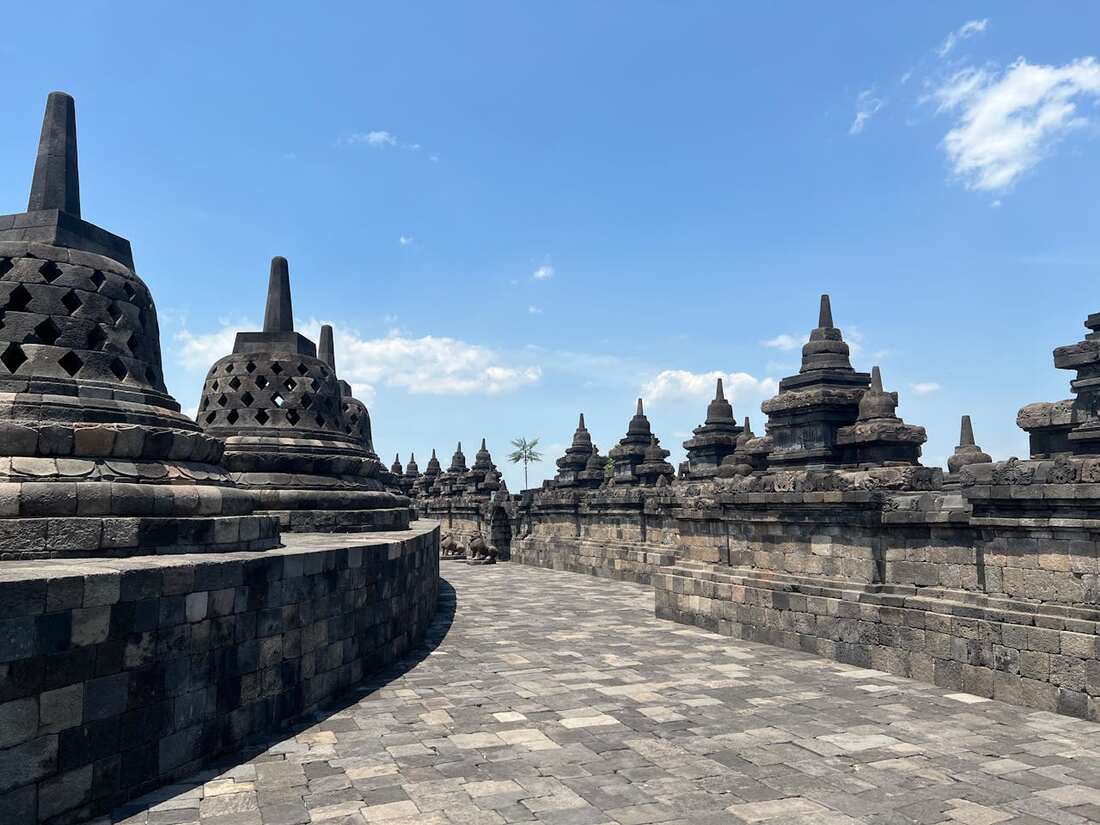
Built by the Syailendra Dynasty between the 8th and 9th centuries, Borobudur is not just a stupendously large temple (like even if that were common place!), but a physical manifestation of Buddhist cosmology. Viewed from above, the structure takes the form of a giant tantric mandala, serving as both a shrine to the Buddha and a guide for the human soul. The monument is constructed of approximately 55,000 cubic metres of interlocking andesite volcanic stone, laid without the use of mortar. Its design consists of nine stacked platforms—six square and three circular—topped by a central, monumental stupa that reaches toward the Javanese sky. Goosebumps yet?
The ascent represents the spiritual journey through the three realms of the universe:
- Kamadhatu (The Realm of Desires): The hidden base of the temple, depicting the world of human impulses and the law of cause and effect.
- Rapudhatu (The Realm of Forms): The middle terraces, where 2,672 intricate relief panels illustrate the life of the Buddha and the path to abandoning worldly attachments.
- Arupadhatu (The Realm of Formlessness): The upper circular terraces, home to 72 openwork stupas, each housing a seated Buddha statue. This level symbolizes the attainment of Nirvana, where name and form no longer exist.
Every relief and statue within this 9thcentury marvel is a narrative map, intended to lead the pilgrim from the chaos of everyday desire to the clarity of enlightenment.
The ‘Climb Up’ Protocol: Space and Silence
The most significant change for the 2026 season is the refined ‘Climb Up’ (Naik Candi) system, which has been designed to mitigate the stone erosion that threatened the monument for decades. Access to the upper terraces is no longer a standard feature of grounds admission; it now requires a specialised permit and adherence to strict conservation measures. The daily quota is limited to 1,200 visitors, divided into hourly sessions starting at 8:30 AM. This ensures that only 150 people are on the structure at any given time, returning a sense of quietude to the upper stupas that was often lost during the era of mass tourism.
To further protect the ancient andesite volcanic stone, all climbers are required to wear Upanat sandals. These traditional woven shoes, crafted by local artisans, feature soft soles that minimize abrasive impact on the 9th-century steps. Additionally, visitors move in groups of 15, each accompanied by a certified conservation guide. These guides serve as more than just narrators; they are stewards of the site, ensuring that the ‘Silent Ascent’ protocol is respected while providing deep historical context for the intricate relief panels that line the corridors.
The Premium Dawn: Sunrise Access Reopened
Following a period of restricted access, the Borobudur Sunrise experience has been fully restored for 2026, though it remains one of the most exclusive offerings in Indonesia. Entry is limited to just 100 people per day, primarily facilitated through the Manohara gateway at 4:30 AM. This premium access, priced at approximately 1.5 million Indonesian rupiah (around US$90) for international visitors, includes the mandatory Upanat sandals, a specialised ‘Dawn Guide’, and a post-sunrise breakfast overlooking the temple grounds.
The visual experience focuses on the moment the sun crests the horizon over the Kedu Plain, silhouetting the active peak of Mount Merapi against a shifting palette of indigo and gold. As the mist settles into the valley below, the upper circular terraces of the Arupadhatu level appear to float above the clouds. Because visitor density is kept to a minimum during these sessions, travellers are able to observe the 504 Buddha statues in near-total silence, allowing for an unobstructed and meditative perspective of the site’s transition from night to day.
Prambanan: The Hindu Mirror
Located just 18 kilometres from Borobudur, the Prambanan Temple Complex serves as the spectacular Hindu counterpart to its Buddhist neighbour. Built in the 10th century, it remains the largest Hindu temple site in Indonesia, dominated by three primary shrines dedicated to the Trimurti: Shiva, Vishnu, and Brahma. The central Shiva temple, reaching a height of 47 metres, is the tallest historical structure in the country, its slender, soaring spires a direct contrast to the horizontal bulk of Borobudur.
A visit to Prambanan is best timed for the late afternoon, allowing the orange light of the setting sun to catch the detailed stone carvings of the Ramayana epic that wrap around the main balustrades. For those staying into the evening, the Ramayana Ballet – performed in the open-air theatre with the illuminated temples as a backdrop – provides a professional and visceral presentation of Javanese performing arts. Like Borobudur, Prambanan is now managed with a focus on visitor flow and preservation, making it an essential and sophisticated second act to a Central Java heritage tour.
Practical Logistics: The Post-2025 Shift
Travel between these two UNESCO sites has been streamlined by the expansion of the Yogyakarta International Airport (YIA) and improved road corridors. It is important to note that the previous combination ticket for both temples has been discontinued for 2026; each site now requires separate admission to manage the unique conservation quotas of each complex. For those planning a full-day expedition, we recommend booking the earliest Borobudur session followed by a late afternoon exploration of Prambanan to avoid the midday peak.
Borobudur: A Masterclass in Conservation, Indonesia!
Borobudur and Prambanan stand today as the gold standard for heritage management in the 21st century. By prioritising these monuments’ structural integrity over raw visitor numbers, Indonesia has successfully restored the spiritual and historical gravity of the Javanese heartland. It is a journey that requires planning and a respect for local protocols, but the reward is a rare, unhurried immersion into the architectural height of 9thcentury Southeast Asia.
Are you ready to experience the silent majesty of Borobudur and the soaring spires of Prambanan? Contact us today to begin mapping your bespoke Central Java itinerary in an epic Indonesia holiday – call us on 1300 991 751!
More Travel Blog Articles
The Mount Bromo & Ijen Tour: A Great East Java Guide For Adventurers
If you’re imagining Indonesia as beaches, great spicy food, 24-hour party houses, yoga retreats and…


2026 Guide to One Of Bali’s Great Preserves: Exploring West Bali National Park
The Taman Nasional Bali Barat, or the West Bali National Park, represents one of the…