
A Handy Guide to Pura Besakih and Mount Agung in Bali
Estimated word count: 751 words
Estimated reading time: 6 minutes
Share This Article

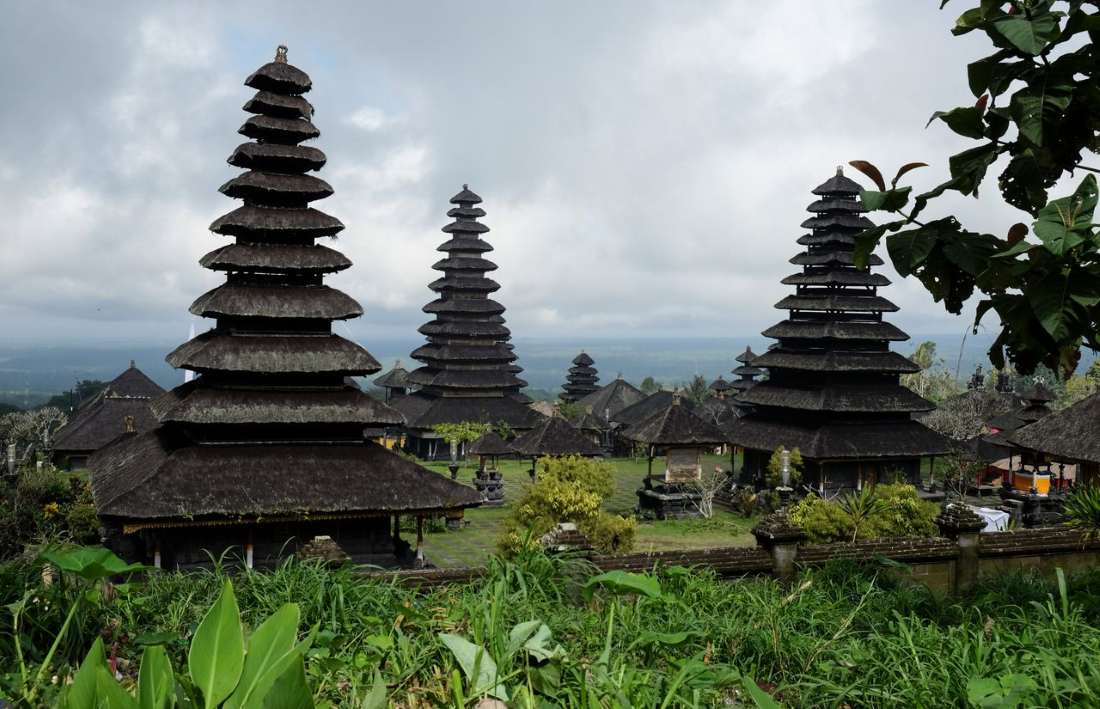
The Pura Besakih – widely known as the Mother Temple – is the largest, most significant, and holiest temple complex of Balinese Hinduism. Perched nearly 1,000 meters high on the southwest slopes of Mount Agung – Bali’s tallest and most sacred active volcano – Besakih represents a distinct spatial experience. It is a world removed from the crowded beach clubs, rewarding travellers with crisp mountain air, towering tier roofs, and an irreplaceable window into living Javanese-Balinese history.
Built on Volcano Stone: A Master-Planned Spiritual Village
A common misconception among first-time visitors is that Pura Besakih is a single building. In reality, it is a sprawling, three-kilometer-wide spiritual village climbing across six terraced volcanic ridges. The complex comprises 23 distinct but interconnected temples, all orbiting around the massive central sanctuary, Pura Penataran Agung.
The Hierarchy of Sacred Space
The layout dates back to prehistoric megalithic stepped terraces, though its primary structural foundations were established in the 14th century. To the Balinese, the site’s sacred status was profoundly vindicated during the catastrophic 1963 eruption of Mount Agung. While devastating rivers of lava tore down the mountain slopes, the flows miraculously parted, stopping just 15 meters short of Besakih’s main stone walls.
Modern Logistics: Streamlined Pricing and Seamless Shuttles
Historically, Besakih had a reputation for challenging logistics, with aggressive independent touts and unofficial “local guide fees” frustrating travelers at the gates. However, provincial management has completely overhauled the site’s entry system, turning it into a highly organized, stress-free visitor experience.
The international admission ticket is set at a flat rate of IDR 150,000 per adult. Rather than just a basic entry pass, this fee operates as a highly efficient, all-inclusive package. Your ticket explicitly covers:
- The Entrance Pass & Security Wristband: Grants access to all primary terraced levels.
- Mandatory Sarong & Sash Rental: Provided directly at the gate, eliminating the pressure to buy overpriced garments outside the compound.
- The Electric Shuttle Service: A quick, convenient one-way electric buggy ride that transfers guests from the lower parking and reception terminal up the volcanic incline to the main entrance gates.
- An Official On-Site Local Guide: A mandatory, trained community guide who handles spatial navigation, shares deep historical context, and ensures correct behavioral etiquette. (Note: Their services are fully covered by your ticket, cash tips is optional)
The Twin Route: Integrating the Volcano Tour
Because of its unique geography, Besakih shouldn’t be treated as an isolated stop. It integrates seamlessly into a high-efficiency Mount Agung volcano and highland tour.
The defining rule of thumb for this region is timing. By midday, high-altitude mountain mist and heavy clouds routinely roll down Agung’s peak, dropping the ambient temperature and completely obscuring the dramatic volcano backdrop behind the temple’s iconic Candi Bentar (split gateway). To maximize visibility and capture the best photography, plan to arrive at the temple gates between 7:00 AM and 9:00 AM.
An ideal highland itinerary pairs an early morning exploration of Besakih’s upper ridges – such as the 30-minute stone stair ascent to the highest shrine, Pura Pangubengan – with an afternoon driving tour through the spectacular Kintamani volcano viewpoints, or a cultural stop at the historic water palace of Tirta Gangga.
Respecting the Ritual: Etiquette Check
Pura Besakih is a functioning sanctuary of active communal worship, not a static monument. To maintain a respectful balance with local worshippers, keep these fundamental ground rules in mind:
- Dress Modestly: Ensure your shoulders are completely covered, and keep your mandatory sarong and sash securely fastened throughout your visit.
- Respect Inner Sanctums: Tourists are strictly prohibited from stepping inside the inner courtyards (Jeroan). These spaces are reserved entirely for those carrying traditional offerings to pray. Your local guide will direct you to designated exterior viewing areas that offer excellent elevated perspectives without disrupting active ceremonies.
- Mind the Stairs: The stone staircases can be steep and uneven. Use the lateral pathways when processions are moving down the central imperial stairs, and wear comfortable walking shoes suited for volcanic slopes.
- Do Not Make Reels Dancing With & Around Idols
Standing on the upper terraces of Pura Besakih, looking down across the sweeping valleys of East Bali with the massive volcanic cone of Mount Agung rising directly behind you, it is easy to understand why this site anchors the island’s identity. Ready to explore Bali’s highland heritage? Our travel experts specialise in crafting comprehensive, private day tours that seamlessly combine Mount Agung’s best volcano vantage points with seamless, guided access to Pura Besakih. Check out our Bali Hot Deals or connect with us at 1300 991 751!
More Travel Blog Articles
Cool Highlands and Living History: A 5-Day Malang and Batu Itinerary
While Bali’s beaches dominate the classic Indonesian itinerary, travellers seeking cooler climates and deep cultural…